When audiences watch a film, they see actors on screen, hear dialogues, and become immersed in the story through compelling visuals. Yet the person who shapes those visuals into a seamless narrative often remains behind the scenes—the film editor.
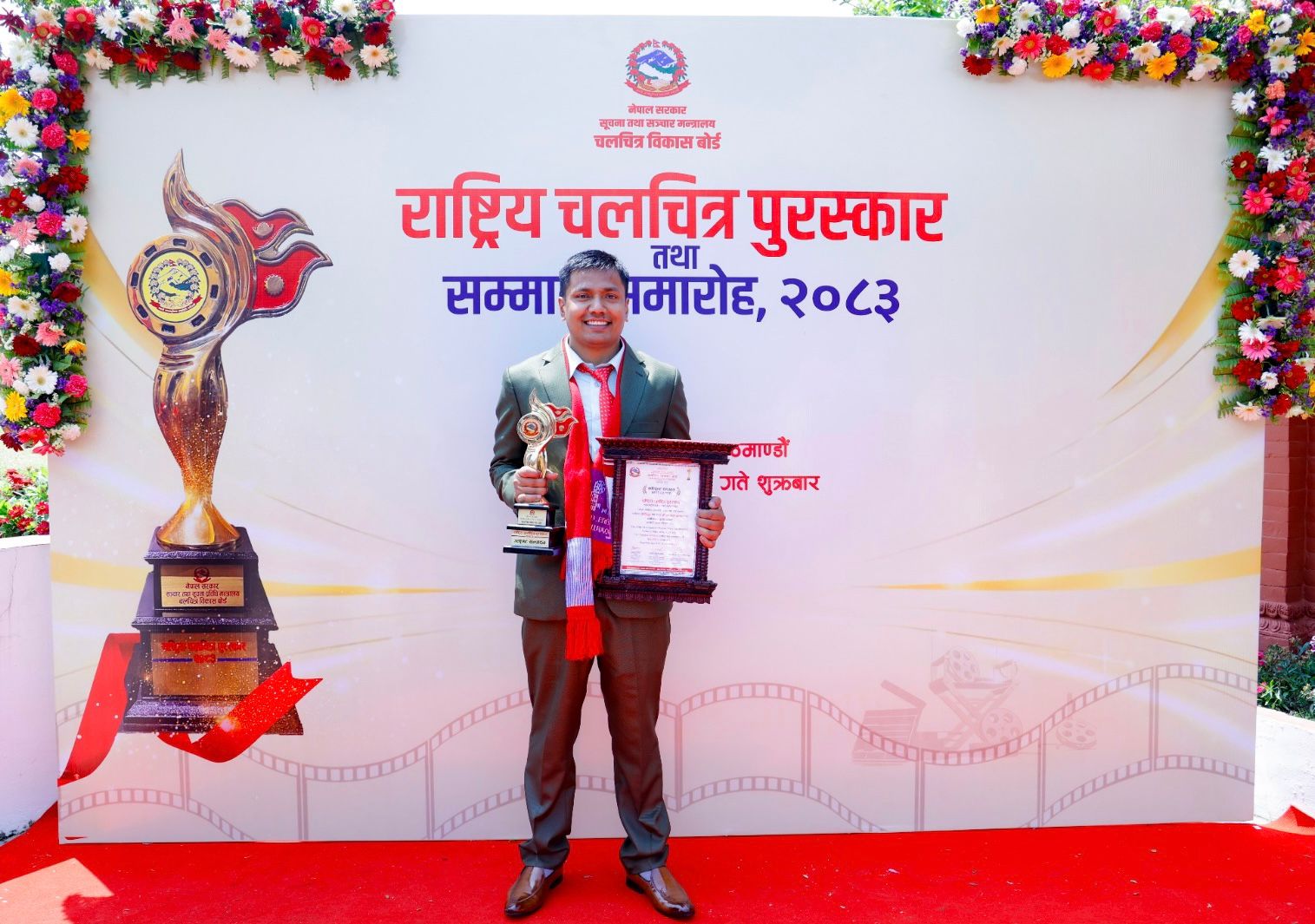
After nearly two decades dedicated to that unseen craft, Nepali film editor Nahakul Khadka has been honored with the Best Film Editor Award at the National Film Awards 2082.
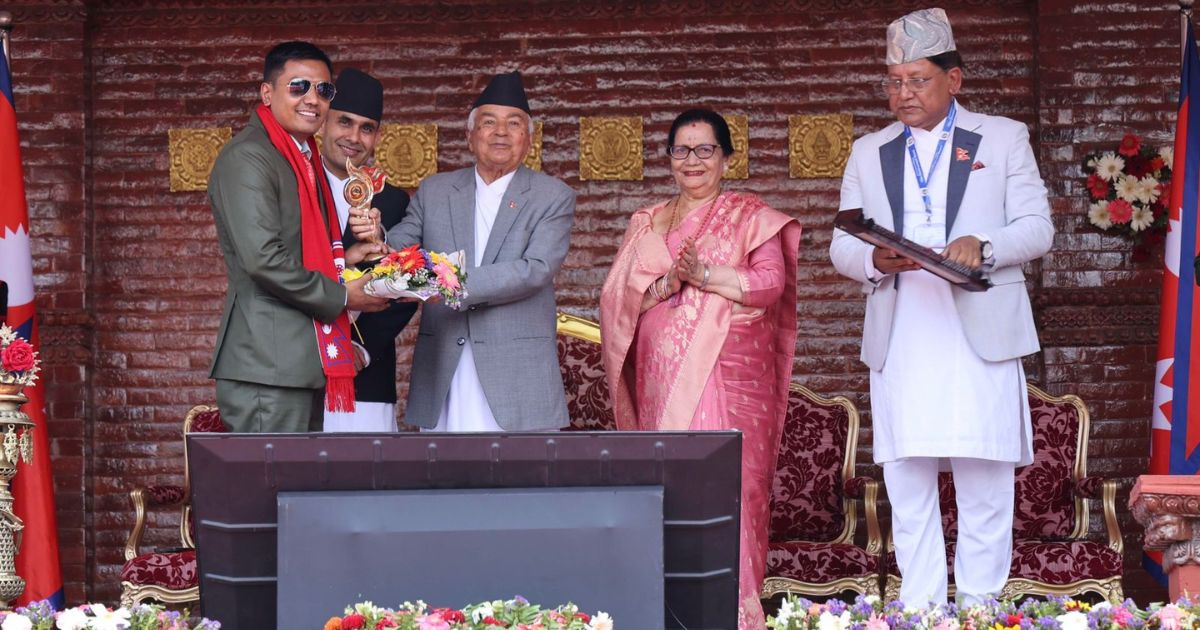
Receiving the prestigious award from the Right Honorable President, Khadka described the recognition as a culmination of years of hard work, consistency, and dedication to the art of film editing.
Among the films he edited that were considered during this year’s awards were Ke Ghar Ke Dera: Ghar No. 2, Kosedhunga, and Haribahadurko Jutta. Earlier, he had also won the Best Editor award for the same film at the Rural Film Festival.
Born in Dhankuta, Khadka has been active in Nepal’s film editing industry for 19 years. Beginning his career as an assistant editor, he gradually advanced through the ranks to become one of the industry’s respected chief editors.
Over the years, he has worked on more than 200 films in various capacities, including assistant editor, associate editor, and editor.
Colleagues describe Khadka as a calm, responsible, and highly committed professional. Known for focusing more on his work than on self-promotion, he has built a reputation through dedication and consistency rather than public attention.
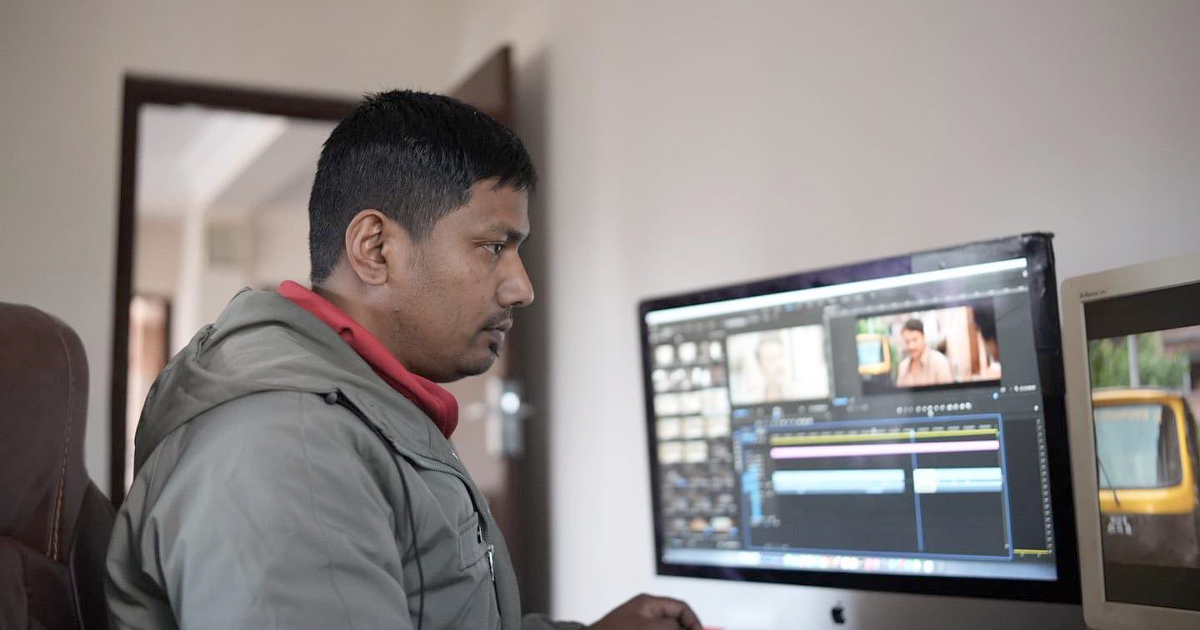
Spending countless hours in editing rooms, Khadka has developed a deep understanding of cinematic language, narrative structure, and the emotional journeys of characters. While many perceive editing as simply cutting and joining scenes, the role extends far beyond technical assembly.
Editors decide which scenes remain, which are removed, which take among several versions best serves the story, and how one scene transitions into the next. They determine a film’s pace, establish its rhythm, and help shape the emotional impact it has on viewers.
Transforming hundreds of filmed scenes and thousands of clips into a coherent and engaging story requires patience, technical expertise, and creative vision. Khadka has been carrying out this responsibility continuously for more than a decade and a half.
The film industry has undergone significant technological changes since Khadka began his career. Modern editing relies on advanced software, digital workflows, and evolving storytelling techniques. Editors must continually update their skills to keep pace with these developments.
Khadka has successfully adapted to these changes, maintaining his relevance and productivity in an increasingly digital filmmaking environment.
Film editors play a crucial role in connecting a director’s vision, a cinematographer’s visuals, and an actor’s performance into a unified narrative flow. For this reason, editing is often referred to as the “final writing” of a film.
The National Film Award has brought Khadka’s work into the national spotlight. With the recognition, however, comes a greater responsibility to deliver even more refined work in future projects—a challenge he readily acknowledges.
His achievement has also drawn attention to the contributions of editors and other technical professionals who work behind the camera. While actors and directors often receive the most public recognition, filmmakers agree that editors, cinematographers, sound technicians, and art directors are equally essential in bringing a film to life.
Khadka’s success serves as a reminder that some of the most important creative contributions in cinema happen far from the spotlight—yet their impact is visible in every frame audiences see on screen.